Book review: Parable of the Sower
A review of Octavia Butler's Parable of the Sower, our latest book club read.
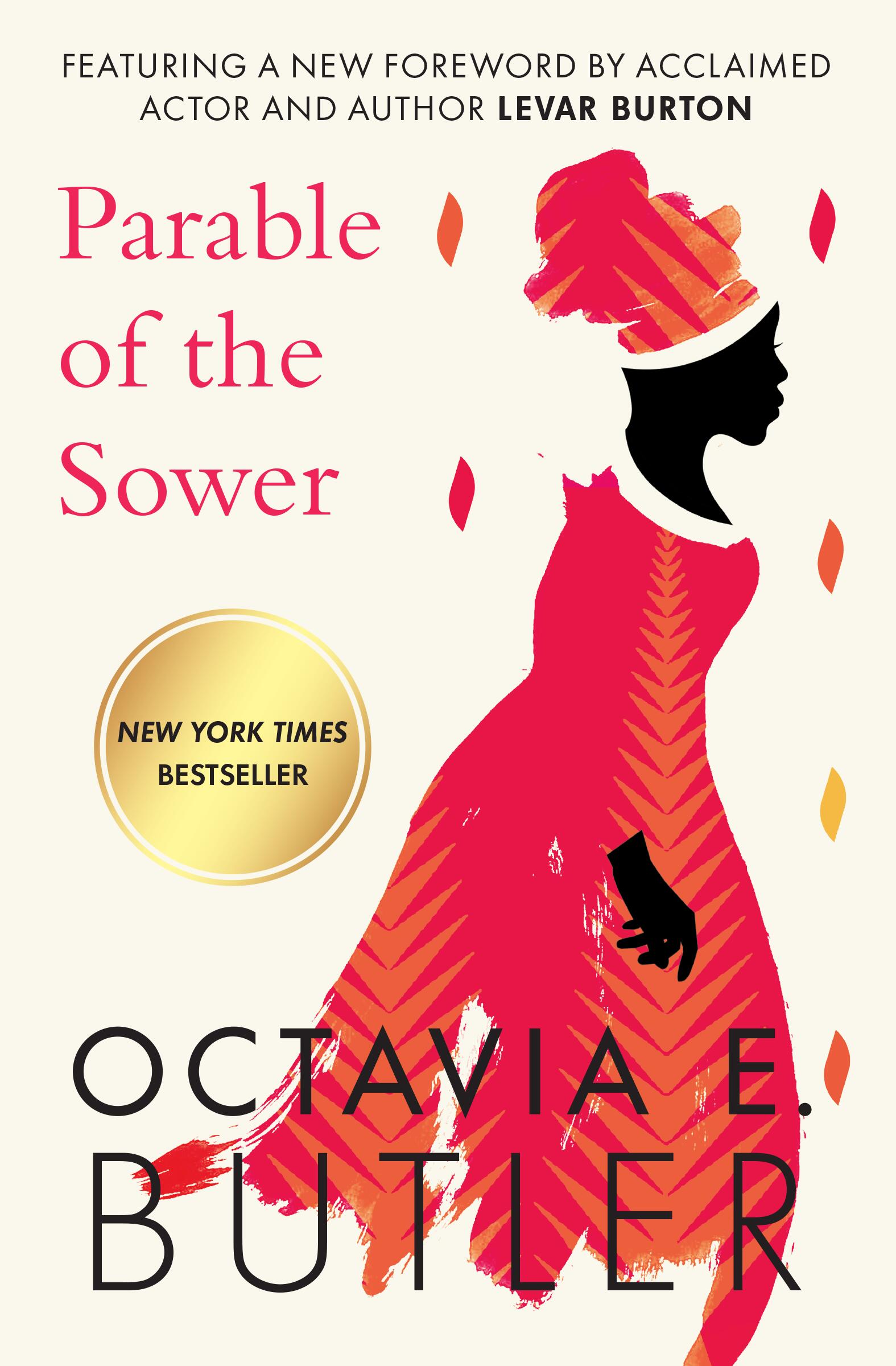
Parable of the Sower by Octavia E. Butler.
Given how seminal Parable of the Sower by Octavia E. Butler is as a work of speculative and dystopian fiction, it’s surprising it took me this long to get to it. I think I was put off by how bleak I’d heard it to be. Also, while I’d loved Bloodchild, it had taken me a week to recover; Parable promised to be no cheerier. Misery loves company, so I decided to subject our book club to it. Here are my spoiler-full notes about the book, based on my own thoughts as well as the discussion we had after.
Overall: I enjoyed it, though I really wanted to stop about 25% of the way through because of how casually violent it was. I’m glad I kept going though. There was much to grapple with, so a good book club pick (pats self).
Octavia Butler wrote the book in 1993, but it feels uncomfortably prescient and close to home. The novel is set in a 2024-2027 California torn apart by social inequality and climate change and features an American president whose slogan is Make America Great Again (!). Octavia Butler is a masterful writer. The book is written from the perspective of a 15-year-old, Lauren, living through dystopia and recording her writings in her journal, and she somehow made the writing seem real and true to the conceit while not being extremely annoying. The prose was exactly what I would imagine from a precocious and articulate teenager. As we’ve read and discussed several books in our book club over the last year, I’ve had to think about what kind of writing I like, and I’ve realized that I prize cohesive and believable prose that keeps you immersed in the story above all else. I hate it when a weird turn of phrase or choice of word by the author makes you go “huh?”. The writing in this case was gripping! Despite the violence, I couldn’t put it down, unlike with Game of Thrones.
Speaking of Game of Thrones, this book had so. much. casual. violence. Horrific violence. Especially rape. So much. The casualness of it was shocking. It made sense in the narrative because she’s a prematurely-jaded teenager recording her post-apocalyptic life in her journal, but it was a hard read especially in the first half of the book. It becomes less violent after that, or perhaps you as the reader become inured to it as well. It was interesting that the violence, while there was a lot of it, never felt gratuitous. It was almost never described in graphic detail, just mentioned.
Religion is a big part of the book. Lauren’s father is a Baptist minister, so she grows up Christian. But faced with a world that does not feel like the workings of a just God, she invents her own religion called Earthseed. The fundamental idea of Earthseed is that “God is Change.” She says that the only constant is change, so all beings have to deal with it and hopefully even affect it.
Also, somehow, she says we all need to go to space.
SPAAAAAACE!
This is a bit of a crazy leap in theological logic, so let’s break it down.
The practicality of Lauren’s conclusion – that the only moral truth is capital-C Change – makes a lot of sense. “Turning the other cheek” doesn’t really help if you’re living in a world where you can’t trust anyone and people will happily murder you and steal everything you own if they can. But taking it a step further, what is the central problem facing Lauren and her family? What is making people lose all sense of fraternity, and causing them to pillage and burn their neighbors? A lack of resources. So then the ultimate solution, the only solution, is to leave Earth itself (!) and find new planets to live on. Right?
Supply-side thinking if I’ve ever seen it. Lauren would do well in San Francisco.
I loved how crazy and unintuitive this was! It makes complete sense that a smart teenager in her circumstances would come to these conclusions. It’s also interesting as religion design. The central tenet is so compelling (change is the only constant), and the eschatological belief so crazy (so we need to go to the stars), that she attracts a wide variety of believers. Something for everyone.
It actually reminded me of how when I was a teenager, I also believed that “extend[ing] the light of consciousness to the stars” was the only way to save humanity. I’m less Musk-pilled now, but it’s awesome that Octavia Butler was able to capture that adolescent impulse and psychology so well.
Lauren suffers from a condition called hyperempathy, where she viscerally hallucinates the pain of others around her. This condition in a hyper-violent world would be a huge disability (and it is). But I think it is also what drives her to re-invent the Buddhist idea of “impermanence” (anitya) and “suffering” (dukkha) from first principles, without having to sit under a fig tree for seven days. Speaking of Buddhism (since Earthseed has distinctly Buddhist vibes), Earthseed doesn’t go as far as Buddhism in claiming no-self. Earthseed’s philosophy focuses on change and dealing with it, but Lauren still believes in a Self that is acting upon the world, and is more concerned with survival than liberation from suffering.
Parable reminded me of Lincoln in the Bardo, a previous book club pick for us. To fully understand pain and suffering, you must truly feel it, and real empathy can provoke swift action to end violence even at the cost of more violence.
We also discussed how empathy has become a political punching bag in 2026 discourse. The Economist recently had an article about how all factions of American politics have asinine positions on empathy: either not being fully inclusive or rejecting it outright.
It’s interesting and believable that Butler’s dystopia stops short of total collapse. There’s still a government, police, and fire department functioning, for some definition of “functioning”, just more like what you would expect from a broken country. It feels real! While an outright Wild-West collapse of America is unlikely any time soon, slow-crumbling institutions and infrastructure sound awfully familiar.
It was a cool parallel to the Underground Railroad that everybody in the story wants to head north, to the northern states and Canada. It might be because climate change makes Canada more habitable. Or it might just be a case of the grass being greener (literally) where you are not; we don’t actually see in the book if Canada is better off. It reminded me of the scene in Civil War where there’s a played-up joke about Canadian dollars being more valuable than USD, to much horrified laughter. The American psyche cannot comprehend Canada doing better (financially, no less) than them.
I hope that when the next apocalypse happens we choose each other instead of building walls. I think we will.